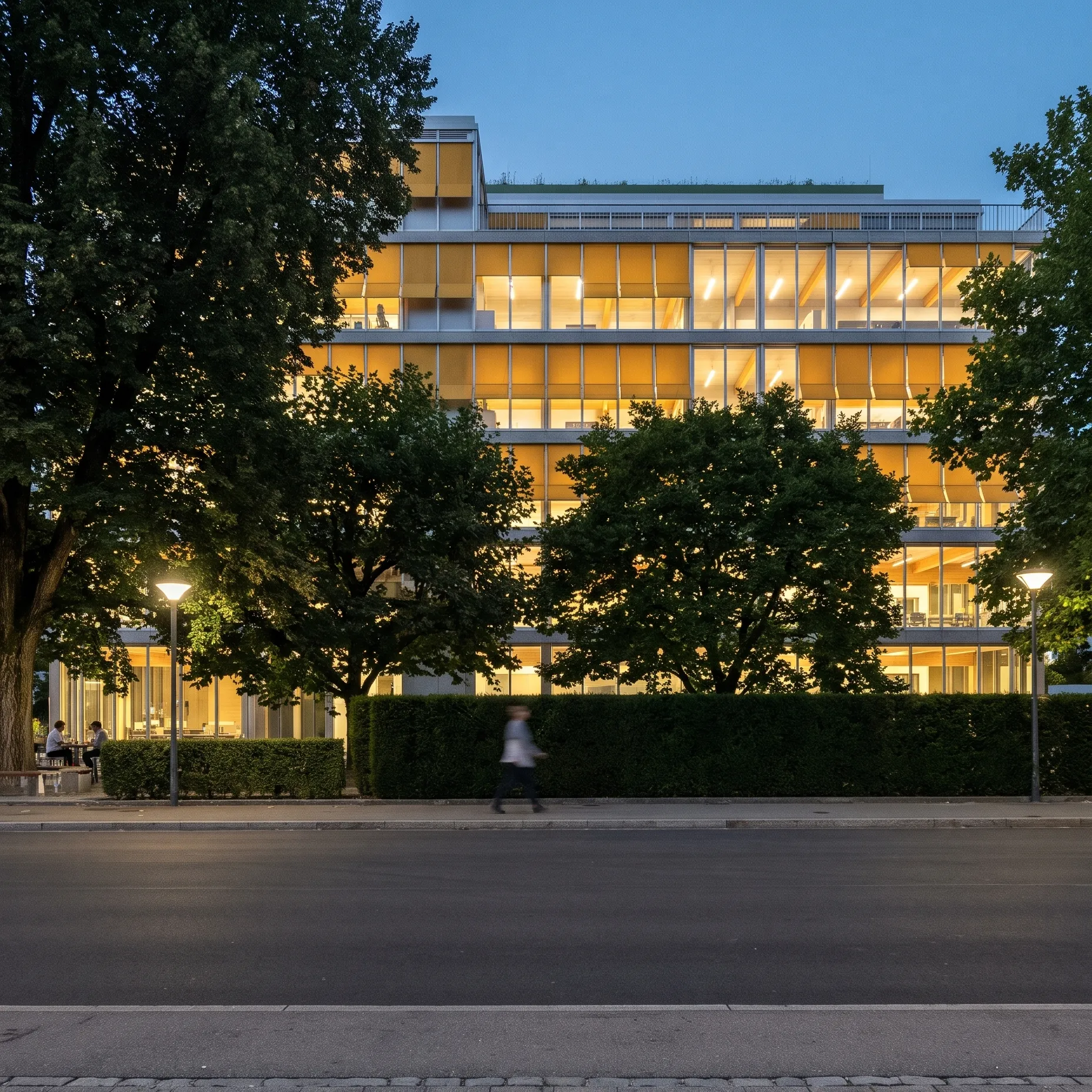
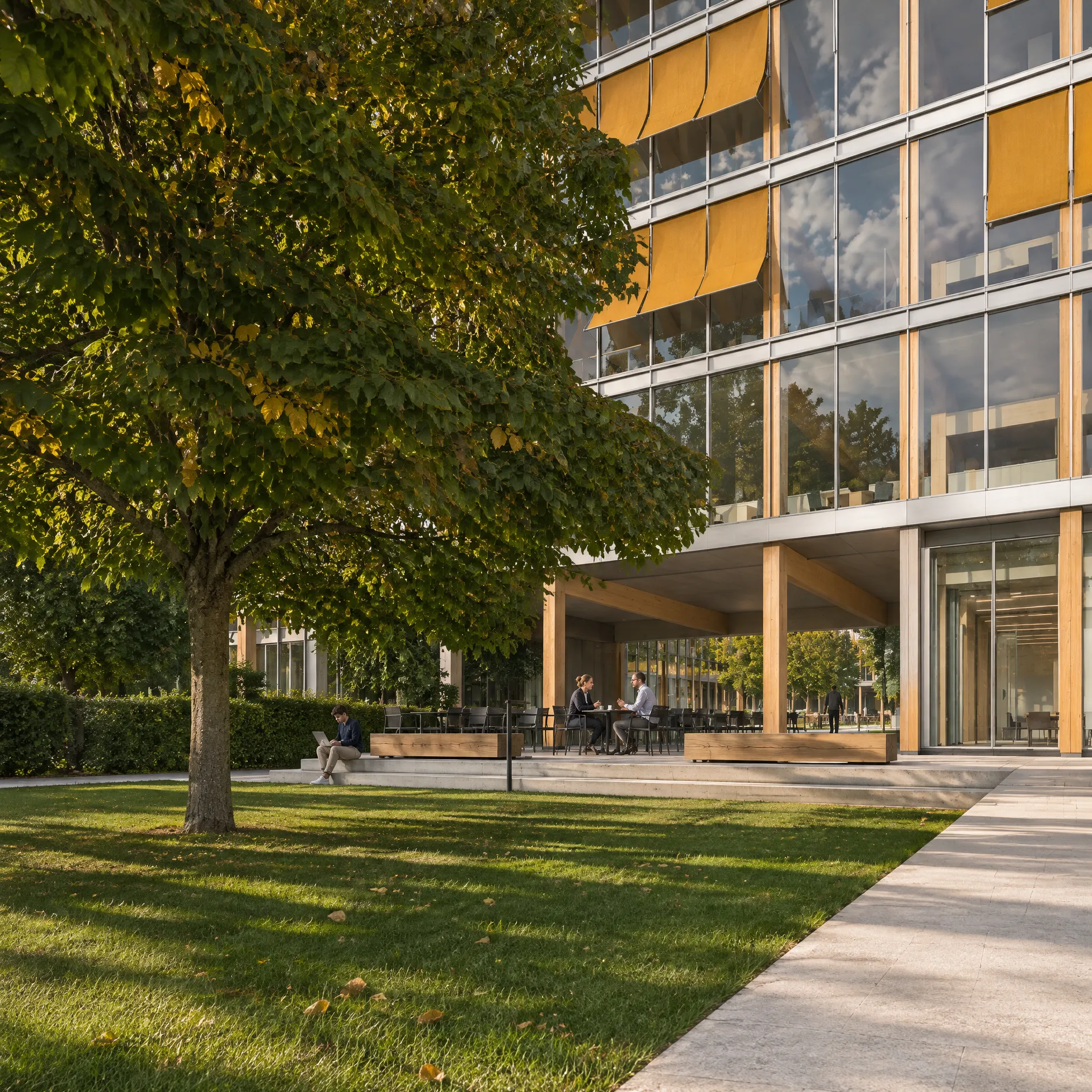
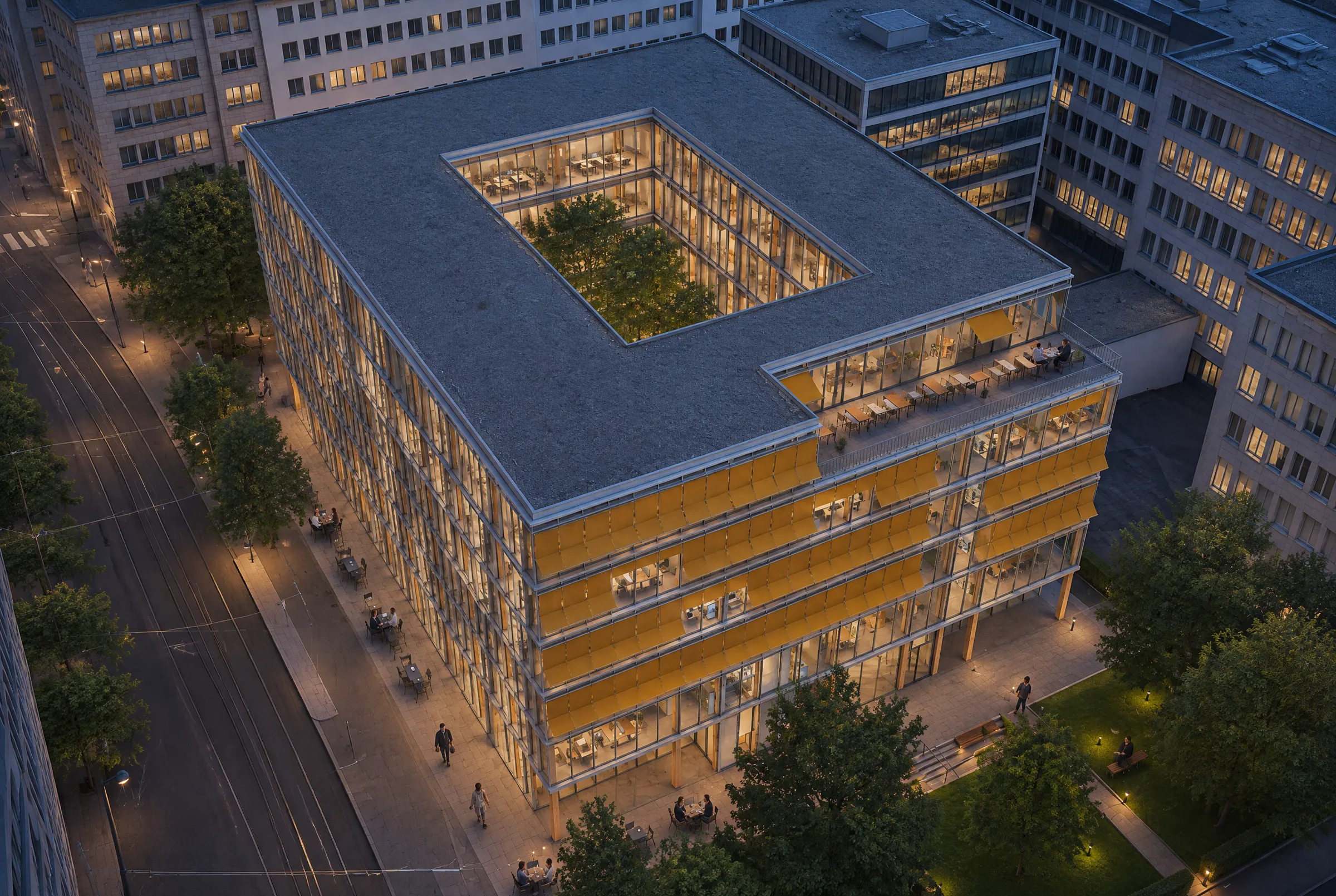
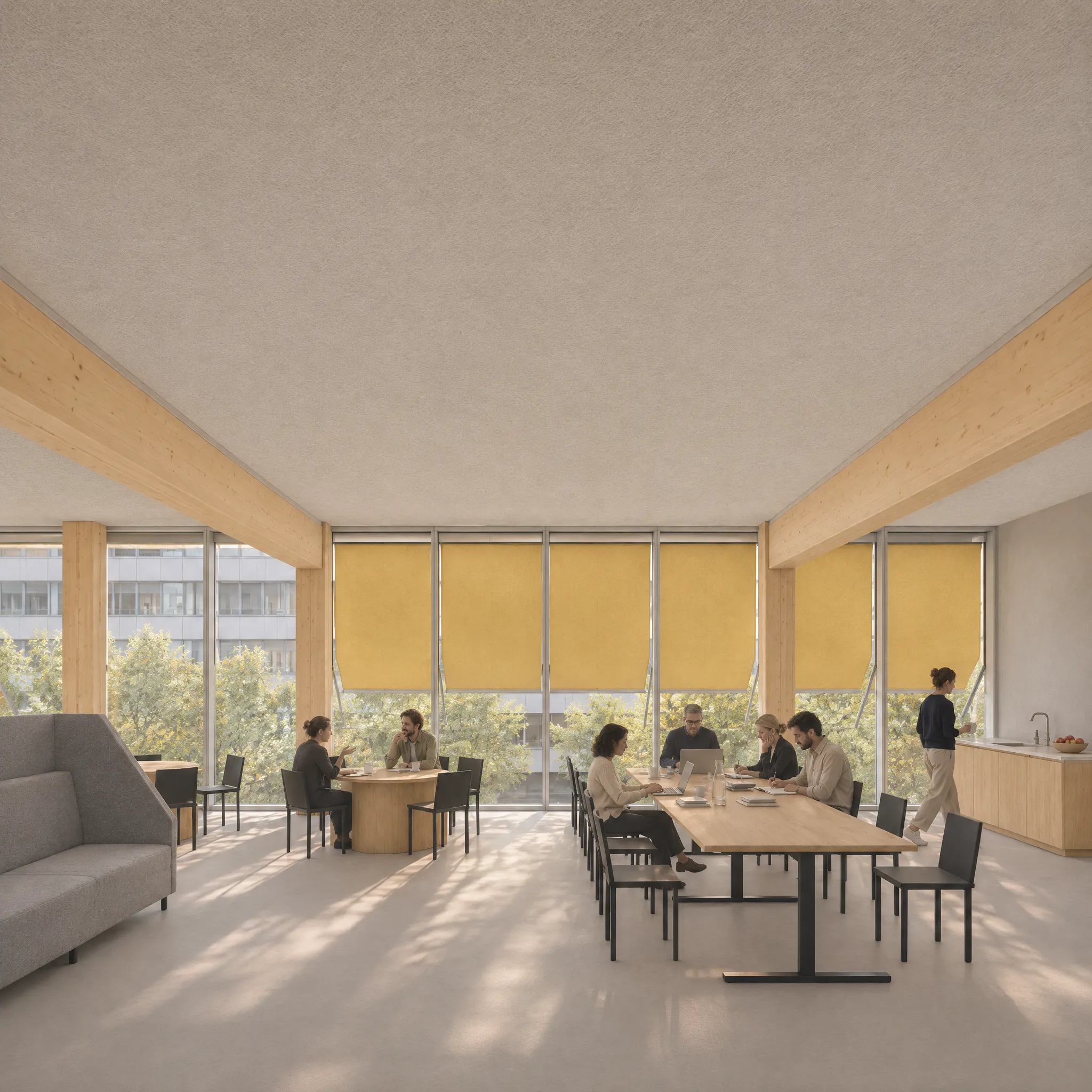
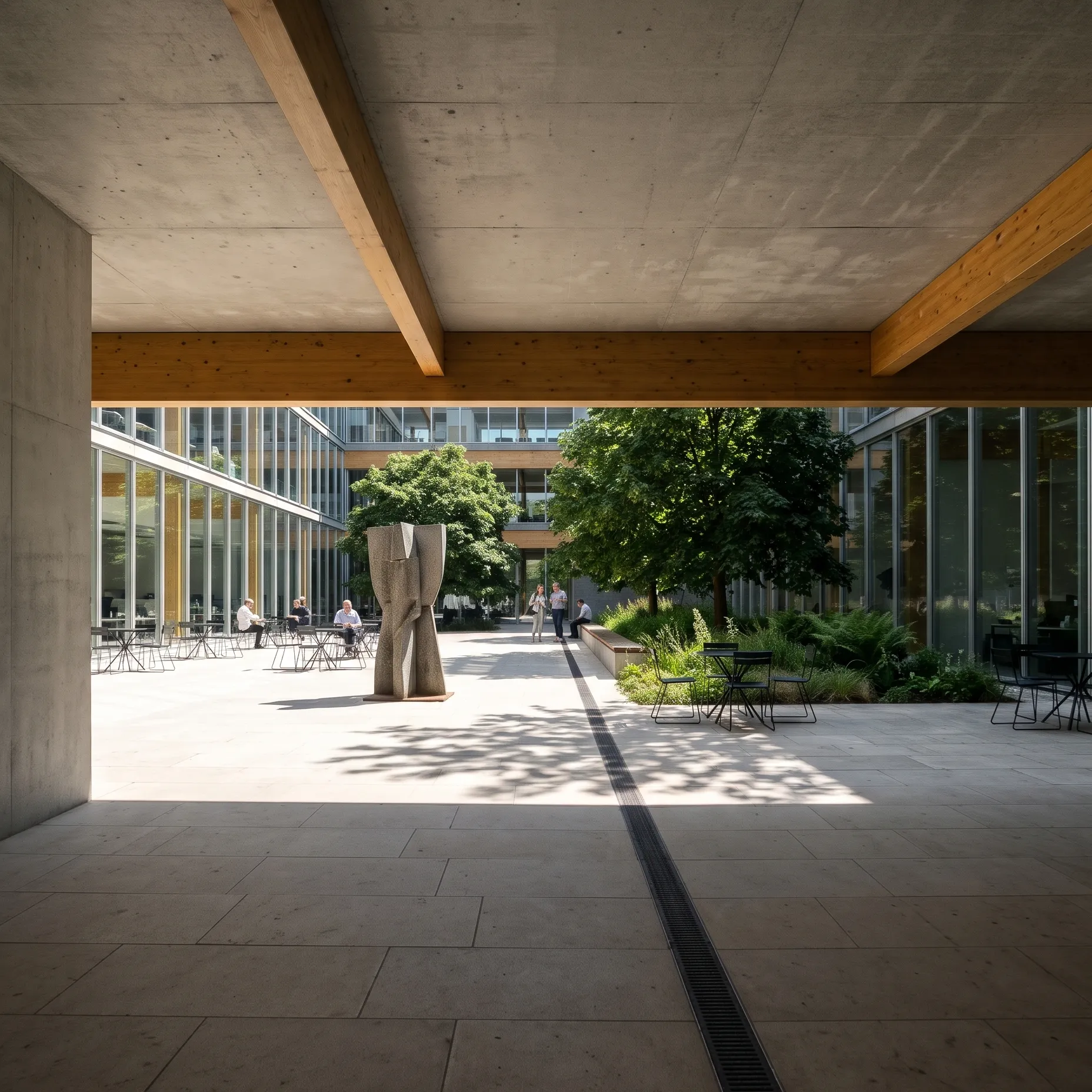
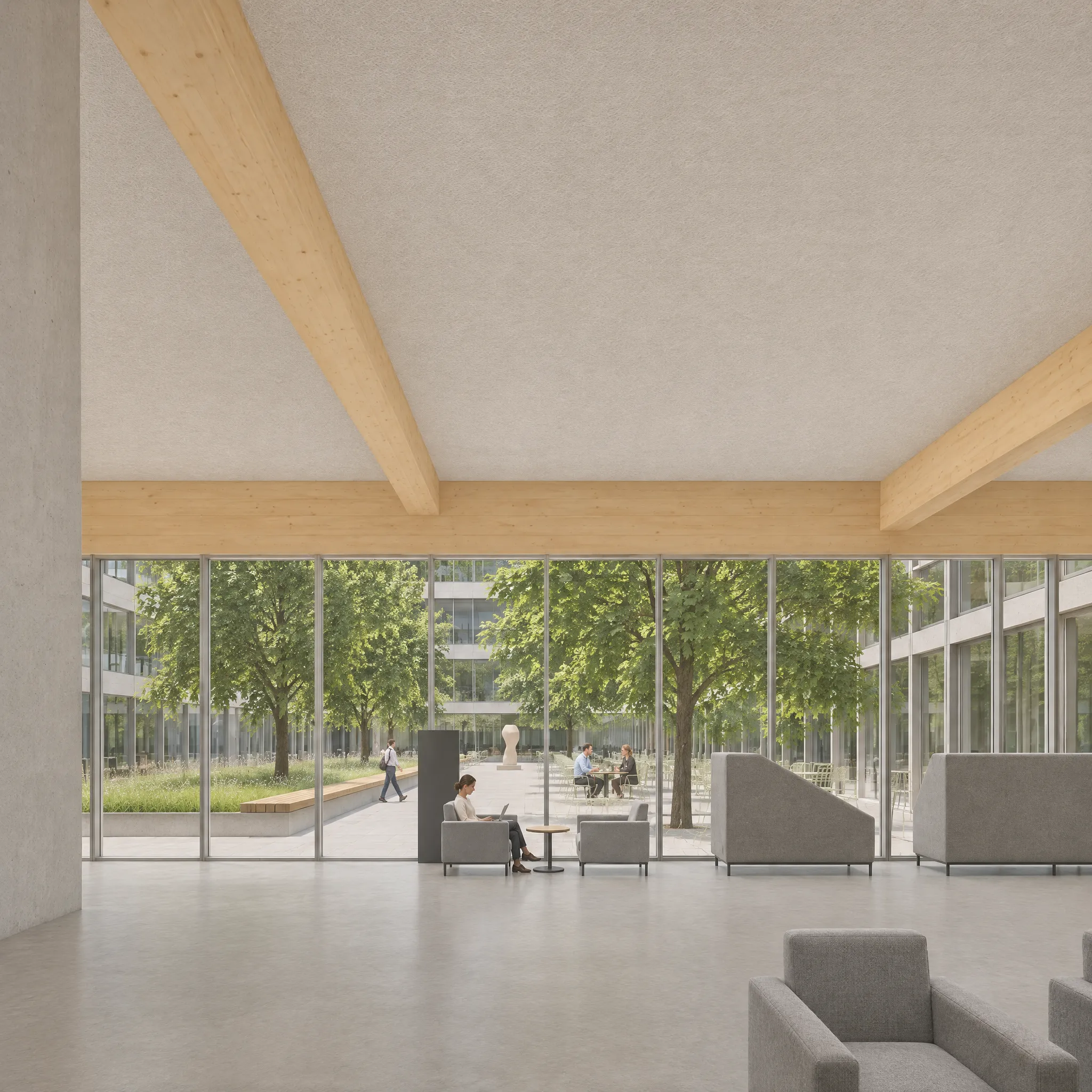
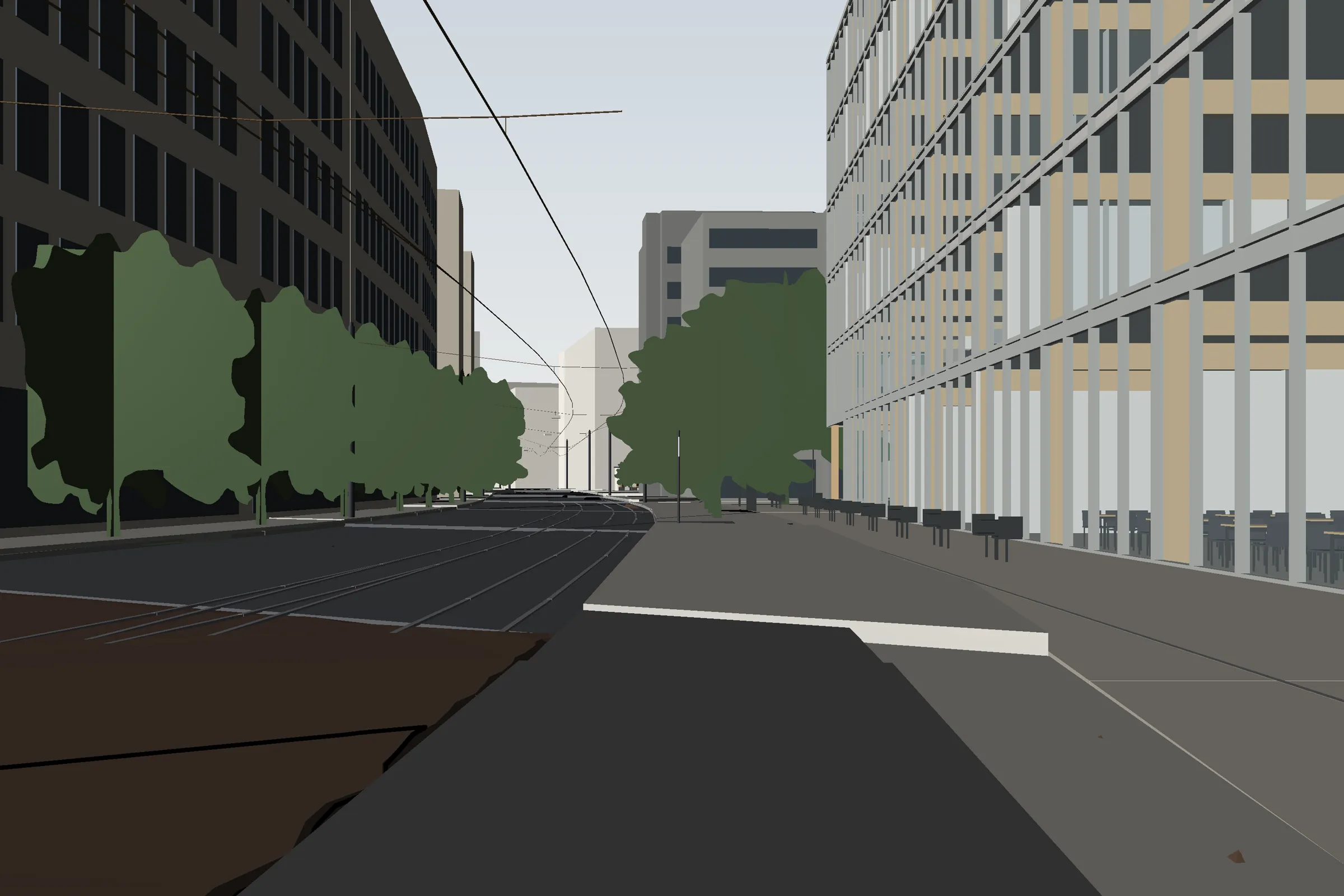
AI renders can change geometry: compare with the model view. Composition guided by the model view. Use the comparison below.
Compare with the model view
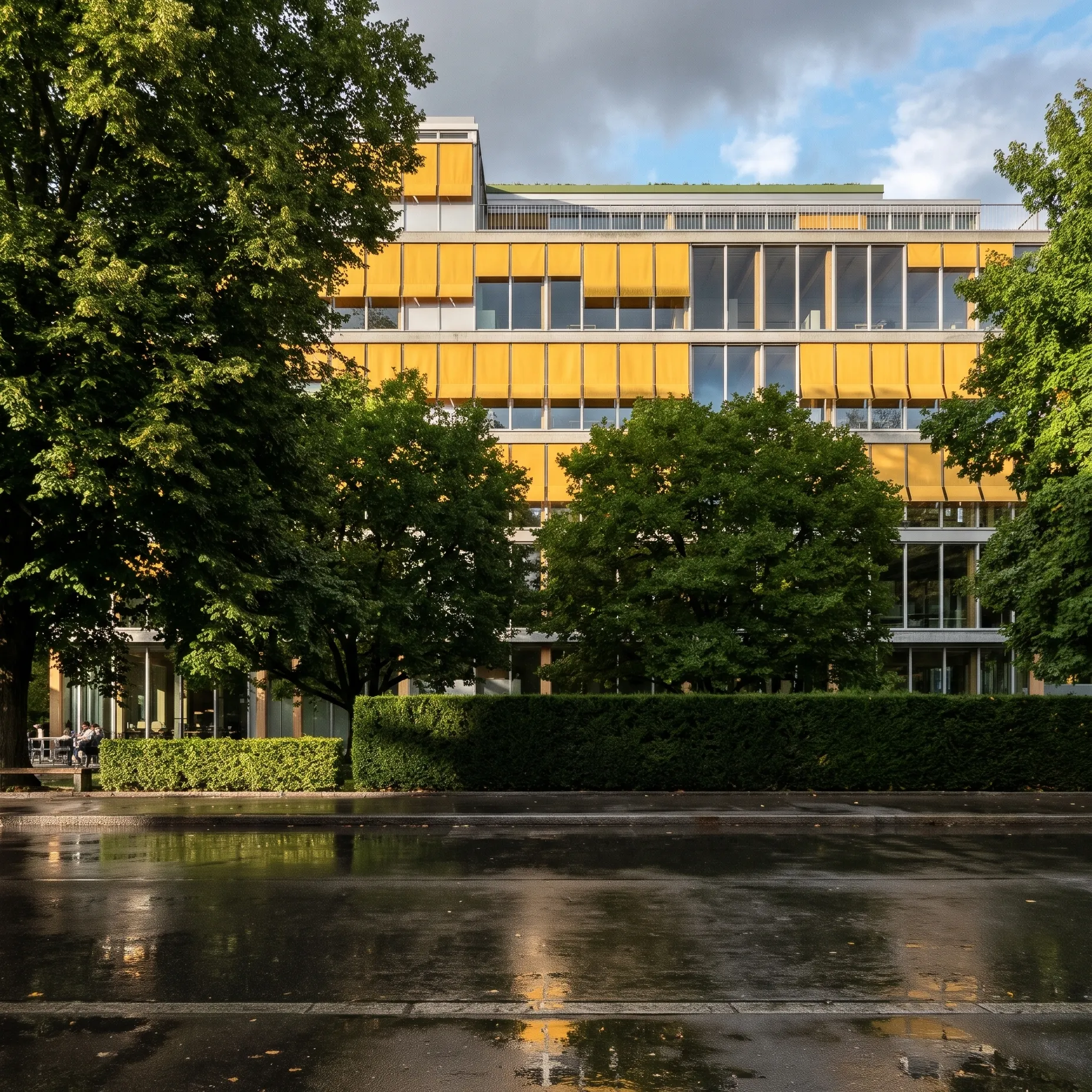
More after rain
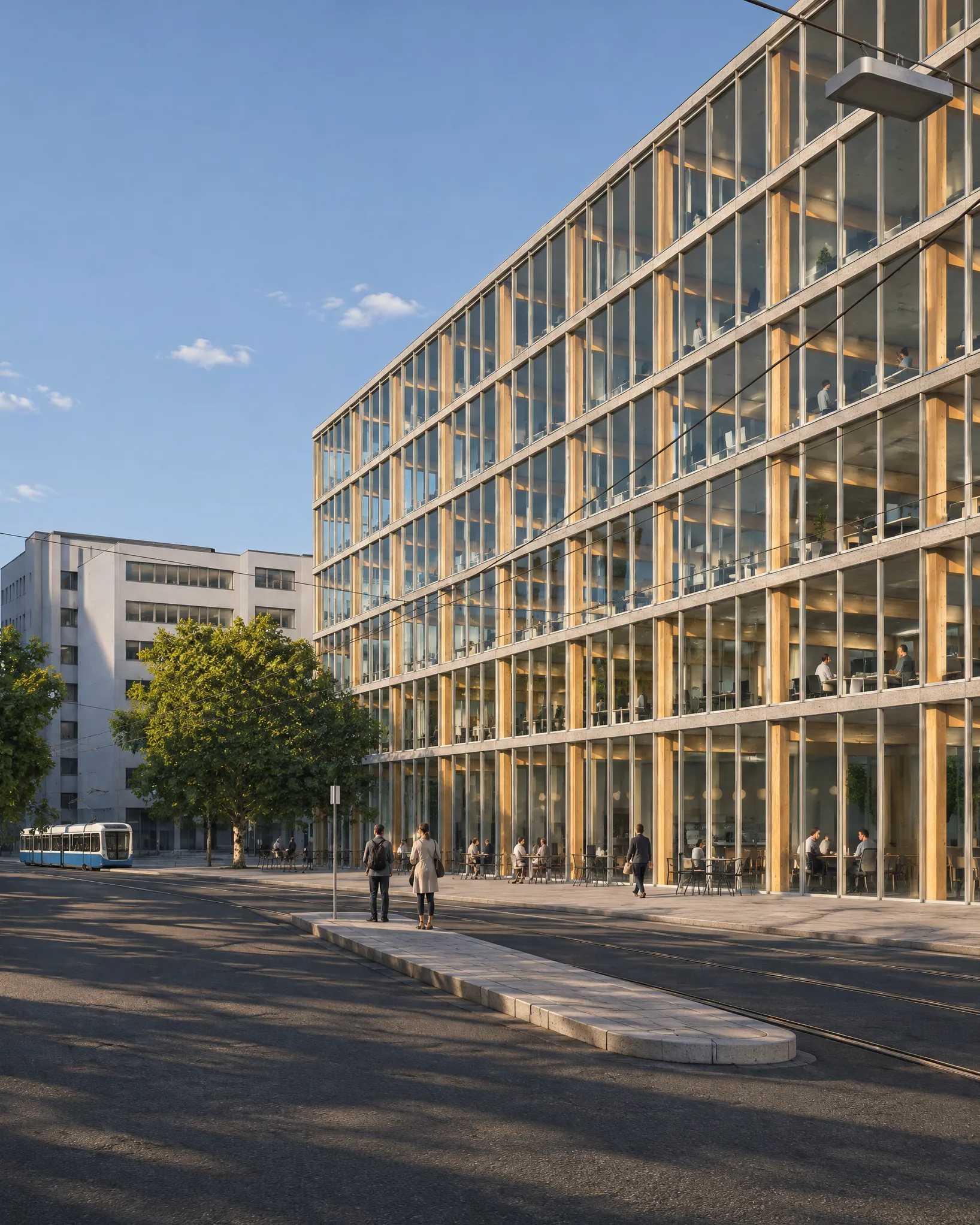
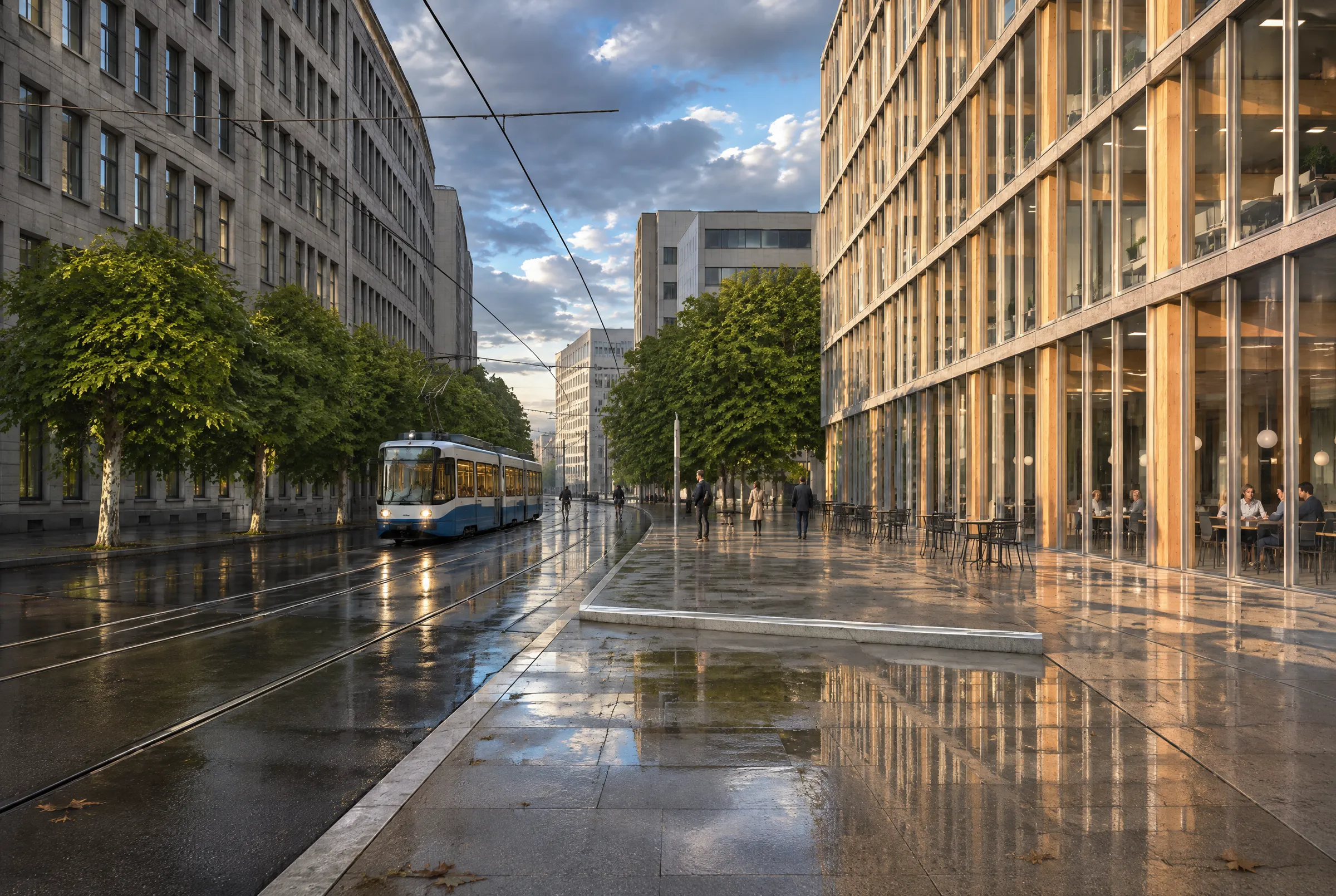
Zurich office · After rain
AI-generatedRevit → GPT Image 2.6
Ask your AI assistant
Take the Revit 3D view along the tram line and render it with GPT Image 2.6, on a June evening after rain.
Show the full prompt
Using the Archi Automate MCP, take the Revit 3D view [the street along the tram line, looking towards the façade] as the reference image and render it with render_view on [GPT Image 2.6 Sunburst], with this image prompt: Camera: keep the input camera exactly. A level camera 1.4 m above a tram-stop platform, 3:2 landscape, horizon a little below the middle of the frame, verticals vertical, one-point perspective looking straight along a city street toward east-north-east; the tram rails and overhead wires lead to the vanishing point in the centre. The platform in the foreground may go slightly soft. Do not raise, move, tilt, zoom or widen the camera. Photographic architectural image, made to read as a real photograph, in which the city street and the weather are the protagonists. Shot on a full-frame camera with a 28 mm lens, f/8, 1/125 s, ISO 200: natural depth of field, fine film-like grain, true photographic detail in stone, wet asphalt, steel rails, glass, concrete and leaves. One decisive moment of light and weather: a June evening, the rain has passed. The shower is over and no rain is falling. The street, the rails, the platform and the pavements are still wet, with puddles that mirror the facades, the tram and the sky; the asphalt shines. The sky is breaking: the grey cloud deck is lifting and tearing open, with bright patches of blue and a bright band of pale sky low behind the buildings at the end of the street. Low raking sun, long crisp shadows: the low evening sun breaks through from behind the camera on the left and catches the office facade on the right with warm raking light, while the rest of the street is in soft, cool, rain-washed light. The tram's interior lights and headlamps are on and reflect in the wet street. Colour is natural and true, not boosted. Strong but believable contrast, dramatic but true. Quiet, specific to this place and this minute. A full photographic tonal range: the sunlit slab bands and mullions of the office facade, the bright breaks in the sky and their reflections in the wet street are the brightest tones, close to white without clipping, while the shaded building on the left, the shade under the street trees and the dark wet asphalt go down to deep, clean near-black. Building on the right: a Zurich office building, a calm curtain wall of natural silver anodised aluminium mullions with clear glass, a grey exposed-concrete slab-edge band at every floor, regular and continuous, and light, honey-coloured timber posts and glulam beams standing just behind the glass; exposed light concrete soffits and office furniture are visible inside. The ground floor is glazed flush to the pavement, with a cafe inside; small black metal bistro tables and chairs stand on the pale stone forecourt in front of the glass. There is no arcade: the ground-floor glass is flush with the facade above. This street facade has no awnings, no blinds and no sun shading: add none. The input is a simplified Revit model, and some things in it are placeholders. Render them as what they stand for, not as they look: - The dark ground on the left is the asphalt carriageway: render it as wet dark grey asphalt with the steel tram rails set into it; the small brown patch at the bottom left is asphalt too. - The platform under the camera is a bare, raised, kerbed strip of pale paving with a white edge line and one stop sign post: it has no shelter, no canopy, no roof, no kiosk, no bench, no ticket machine and no advertising. - The flat green cut-out shapes with thin trunks are placeholders for real mature street trees, plane trees with mottled bark and full summer leaves. Keep each trunk where it is and each crown the same size and outline as its cut-out. - The near-black colour of the building on the left is wrong: it is a real Zurich city building in grey stone with regular window rows, standing in shade. The plain pale blocks at the end of the street are real Zurich office buildings in stone and render, in the same outlines. - The pale grey flat sky is a placeholder; render the sky of this moment. - There are no shadows in the input; add the shadows this light would cast. Street life (not in the model, add it): one Zurich city tram in a plain blue-and-white livery, with no logos, no route number, no destination display and no text of any kind, standing at the platform on the left-hand tracks about 20 to 35 m ahead, in the left half of the frame, never covering the office facade. A few people at true scale, all more than 8 m away: some waiting on the platform, some at the cafe tables on the forecourt, two cyclists riding along the street in the distance. No umbrellas open. No cars. Nobody looks at the camera; nobody is the subject; no crowds. The sun is low in the west-north-west, about 135 degrees to the left of the viewing direction, behind the camera's left shoulder and out of frame. There is no sun disc in the sky, no sun glow, no sunburst, no rainbow and no lens flare anywhere in the image. The skyline is a flat city horizon: only the buildings that are in the input. No invented landmarks, towers, church spires, wooded hills, mountains, masts, cranes or chimneys on the horizon. Treat the input image as the exact geometry and camera. Keep every building element exactly where it is: the office facade on the right with the number, spacing and thickness of its mullions, transoms, timber posts and slab bands, the floor edges, the flush glazed ground floor and the corner at the far end; the buildings on the left and at the end of the street with their outlines and window rows; the platform, its kerb and the white edge line, the stop sign post, the rails, the overhead contact wires, span wires and masts, and the street trees in their places. Keep the horizon height and the frame exactly as in the input. Do not add, remove, move, bend or resize any part of any building. Do not add an arcade, balconies, canopies, awnings or sun shading to the office. Avoid: falling rain, a downpour, a storm, a tram shelter, a canopy or roof on the platform, a kiosk, a bus stop shelter, advertising panels, text, numbers, route displays, signs with lettering, logos, street names or watermarks, awnings or blinds on this facade, an arcade, an orange HDR cast, boosted or oversaturated colour, washed-out or pastel grading, grey lifted shadows, an illustrated or painted look, CGI plastic surfaces, the flat cut-out look of the input trees, brown ground, people posing or looking at the camera, crowds, cars, halos and HDR tone-mapping artefacts, a sun disc or sun glow, a sunburst, a rainbow, lens flare, invented landmarks, towers, hills or masts on the horizon.
The Zurich office, a sample model, on a wet street after rain, the sky breaking over a tram in the distance, rendered by OpenAI GPT Image 2.6 Sunburst from a Revit view along the tram line. AI-generated: the wet street, puddles, sky, leaves, people and tram come from the image model.
- Engine
- OpenAI GPT Image 2.6 Sunburst
- Input
- Revit
- Time
- 43 s
- Cost
- $0.159 (metered estimate)
- Date
- 2026-11-14
- Tools
- Revit → render_view
- MCP calls
- render_view
Method notes
AI-generated image · OpenAI GPT Image 2.6 Sunburst. Not a photograph. Not a built project. This is a render of the Zurich office, a sample model made in Revit through the Archi Automate MCP. It is not a building that was built, and Archi did not design a real building here.
Full Tone. Full colour and real depth: the building in one chosen moment of light. Full Tone reads like a camera image. Natural two-point or axial framing at a believable eye height, true depth and a fine film-like grain. Each image commits to one clear light: hard summer sun with crisp shadows, golden hour raking across the façade, or blue hour with the offices glowing from inside. The moment and the mood carry the image.
How it was made. OpenAI GPT Image 2.6 Sunburst rendered this image through Archi Automate’s render_view, from a Revit 3D view of the sample model. The view was exported from Revit and sent as it was. It is a restyled view, composition guided by the model view, not a record of the model.
Added by the render, not in the model view: the wet street and pavement with their reflections and puddles, the breaking sky, the leaves of the street trees (the model has flat green placeholder crowns), a few people and the tram. The people and the tram are generated by the image model and are not real.
The images on this page are re-encoded for the web. Compare each image with its Revit view before relying on a detail.