Made with Archi Automate · AI render
Scarpa Materials, Veneto Stones
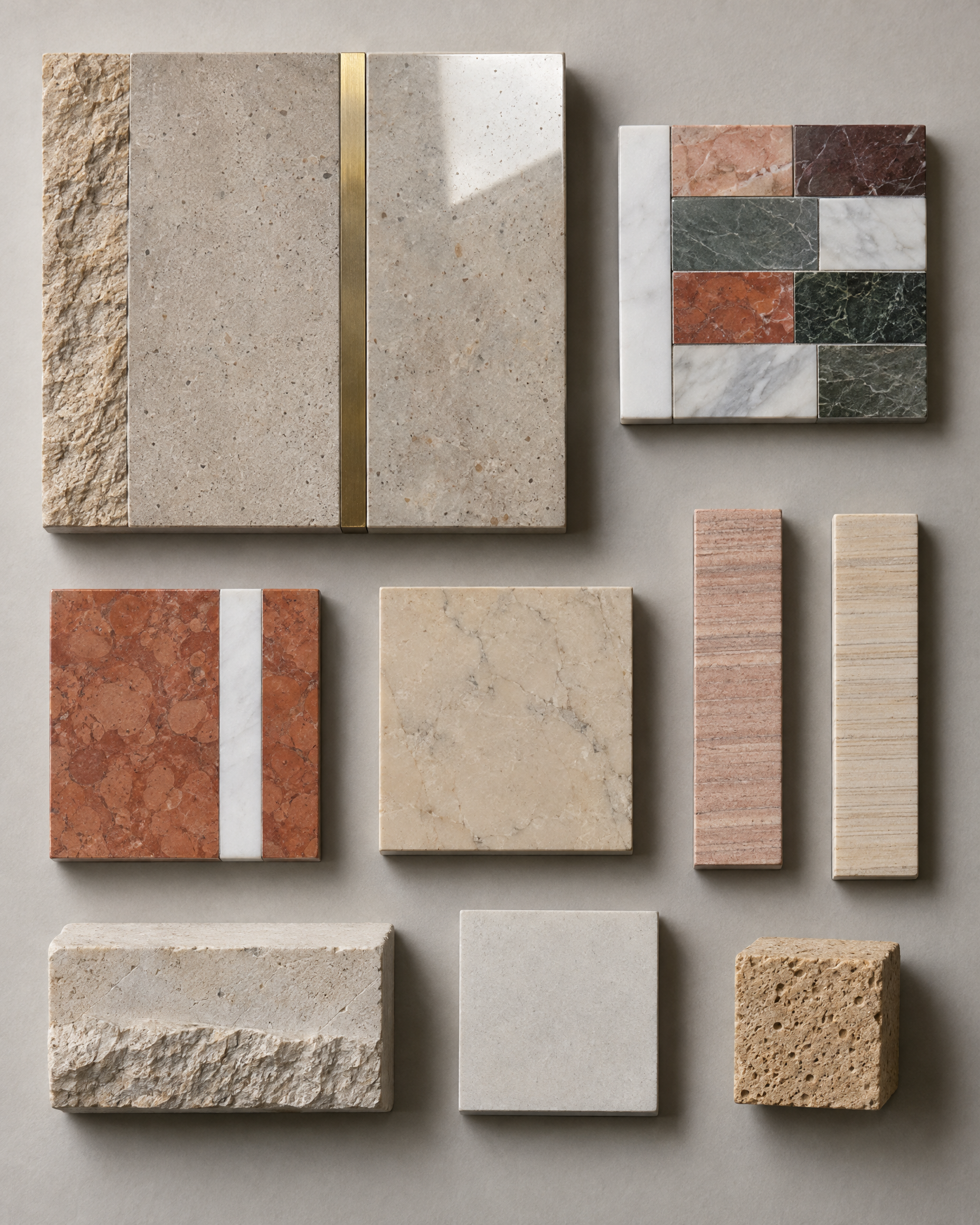
Nine stones after Scarpa's buildings in Venice and Verona: Aurisina in two finishes with a brass strip, polychrome marbles, Rosso Verona with Lasa, Botticino, two Prun stones, a rough-split stone, Istrian stone and tuff, rendered by GPT Image 2.5 Sunburst.
Archi did not design the buildings these samples recall. The samples are AI renders, made to show what the software does.
1664 × 2080 px. Open it full size to see it at 100%.
Not geometry-locked: compare with the model view. AI-generated imagery can change dimensions, openings and materials. The source model view is pending.
Tool chain
- render_view
MCP calls, in order
- render_view
Provenance
| model | OpenAI GPT Image 2.5 Sunburst (openai/gpt-image-2.5-sunburst), text-to-image lane |
|---|---|
| cost | $0.079 (metered estimate) |
| time | 31 s |
| date | 2026-11-08 |
The prompt
Using the Archi Automate MCP, render a materials board with render_view on [GPT Image 2.5 Sunburst] at 1664 x 2080, quality high, text only, with no input images, with this image prompt: A top-down flat lay studio photograph, camera looking straight down, of nine material samples from Italian rooms of regional stone, laid on a matte warm light-grey paper backdrop. The samples are arranged in a calm, balanced, slightly asymmetric composition with generous even spacing; the anchor piece is the largest, and one or two samples overlap a neighbour slightly. Each sample is a small, plainly cut offcut of the real material, as an architect's supplier would send it, matching the material, finish and colour of the named room. Do not depict the buildings or any part of them: no architectural forms, no openings, no ornament, no carving, no motifs. The samples: (1) the largest piece and the anchor, a sample of pale warm grey-beige Aurisina limestone with fine dark specks and faint brown flecks and very little veining: two slabs butted with a hairline joint and a flush brass strip about 1 cm wide, one slab honed matte, the other polished almost to a mirror reflecting the softbox crisply, and a narrow rough cleft-face strip, warmer in tone, along one edge; sharp square arrises, as used at Negozio Olivetti, Venice, floor treads and wall panels; (2) a small panel of small rectangular marble pieces 5 to 10 cm in white, salmon pink, orange-red, dark aubergine brown, grey-green and dark green, laid in straight rows with tight joints, framed along one side by a continuous white marble band, honed to a soft satin, as used at Fondazione Querini Stampalia, Venice, the ground-floor hall floor; (3) a square of honed Rosso Verona, salmon red with nodular mottling of 1 to 5 cm, inlaid with a straight strip of white, finely crystalline Lasa marble about 4 cm wide, as used at Casa Balboni, Venice, floors; (4) a square of honed Botticino marble, warm beige, fine, with thin grey stylolite veins, as used at Banca Popolare di Verona, plinth; (5) a strip of honed pink Prun limestone with thin straight parallel bedding lines in bands of 2 to 10 mm; not travertine, no pores, no wavy veins, as used at Museo di Castelvecchio, Verona, soffits and reveals of the arched passages; (6) a strip of honed pale cream Prun limestone about 6 cm wide with the same fine straight bedding; no pores, as used at Museo di Castelvecchio, Verona, floor bands across the galleries; (7) a thin flat slab of cream limestone about 6 cm thick with one rough-split face, as used at Casa Ottolenghi, Bardolino, stone rings of the columns; (8) a small square of Istrian stone, very pale grey-white, extremely fine and dense, no speckles, honed to satin, as used at Negozio Olivetti, Venice, piazza front slabs; (9) a small cube of Verona tuff, honey ochre, porous with open pores of only 1 to 3 mm, matte, slightly powdery at the arrises, as used at Museo di Castelvecchio, Verona, small display cubes in the galleries. Soft directional studio light from the upper left, like a large softbox, with a gentle fill; real soft shadows and contact shadows under every sample. Macro-level texture is visible on every surface. Neutral, calm, true colour; photographed on a medium-format camera, sharp and detailed, a well-composed professional studio photograph of an architect's material board. No text, no labels, no letters, no numbers, no logos, no tags or stickers. No people, no hands. No furniture, no plants, no flowers, no leaves, no props, no pens or tools, no house, no building, no architectural model, no room, no landscape. No emblems, no interlocking circles or ring motifs, no round windows, no carved figures or sculpture. Only the nine material samples on the backdrop.
Method notes
AI-generated visualisation. Not a photograph. These are AI renders of material samples, not photographs, and they do not claim to match the finishes of the buildings. GPT Image 2.5 Sunburst (OpenAI) made this board through Archi Automate’s render_view from a text prompt alone, with no input image. The image is the model’s output as returned, unretouched.
Where the notes come from. Material notes after Carlo Scarpa’s buildings; our own descriptions and AI renders; no photographs used. No photograph was sent to the model or copied: the prompt was written from our own survey of published sources (the Italian Ministry of Culture’s census of post-war architecture, the owners’ pages and Wikipedia) and from notes we took while looking at published photographs. The board shows generic material samples only, with no architecture and none of Scarpa’s motifs.
The nine samples, each with the building and room it is meant to recall:
- Sample 1: aurisina stone, two finishes (honed and near-mirror polished) with a cleft-face strip and a flush brass strip. After Negozio Olivetti, Venice: stair treads (honed) and wall panels (polished).
- Sample 2: polychrome marble pieces with a white marble band, honed satin. After Fondazione Querini Stampalia, Venice: portego (atrium) floor.
- Sample 3: rosso Verona with a Lasa marble strip, honed. After Casa Balboni, Venice: floors.
- Sample 4: botticino marble, honed. After Banca Popolare di Verona: plinth.
- Sample 5: pink Prun stone, honed, fine bedding. After Museo di Castelvecchio, Verona: soffits and reveals of the arched passages.
- Sample 6: pale Prun stone strip, honed. After Museo di Castelvecchio, Verona: floor bands across the galleries.
- Sample 7: rough-split cream stone ring segment. After Casa Ottolenghi, Bardolino: stone rings of the columns.
- Sample 8: istrian stone, honed to satin. After Negozio Olivetti, Venice: piazza front slabs.
- Sample 9: verona tuff, matte. After Museo di Castelvecchio, Verona: small cubes for the processional crosses.
These attributions are our reading of the sources; a few are still to be verified, such as the exact stone types.
What it gets wrong. The tuff cube is far too open-pored, with holes up to about 5 mm. The polished half of the Aurisina slab reflects a window rather than the studio softbox. Colours and textures are the model’s reading of our descriptions, not a match for the real finishes.
The image above is re-encoded for the web and does not carry Content Credentials. The original PNG (5.9 MB) keeps OpenAI’s C2PA Content Credentials, and the render record lists the model, prompt and cost.
The samples recall the work of Carlo Scarpa (1906-1978) at Negozio Olivetti, Venice (1957-58), Fondazione Querini Stampalia, Venice (ground floor and garden, 1959-63), Casa Balboni, Venice (1964-74), Banca Popolare di Verona (1973-81, completed by Arrigo Rudi), Museo di Castelvecchio, Verona (1956-74) and Casa Ottolenghi, Bardolino (1974-79). His works are protected by copyright. This board is an independent study of materials; it is not endorsed by the buildings’ owners or by Scarpa’s heirs.
Windows · 14-day free trial · no credit card. Install, connect your assistant, paste the prompt. Replace bracketed values with your own.
More in AI renders
View category ↗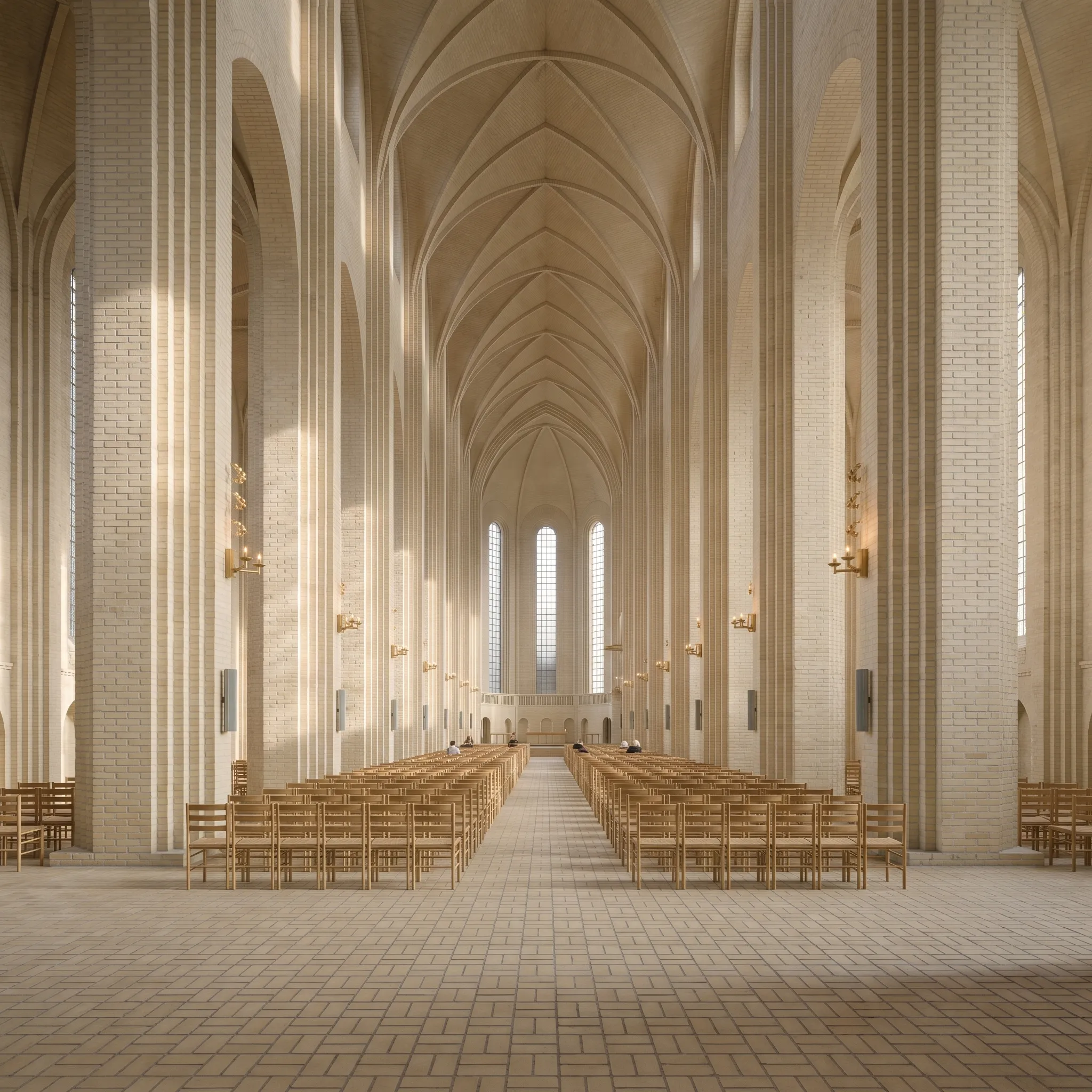 AI-generated
Grundtvig's Church, Nave
 AI-generated
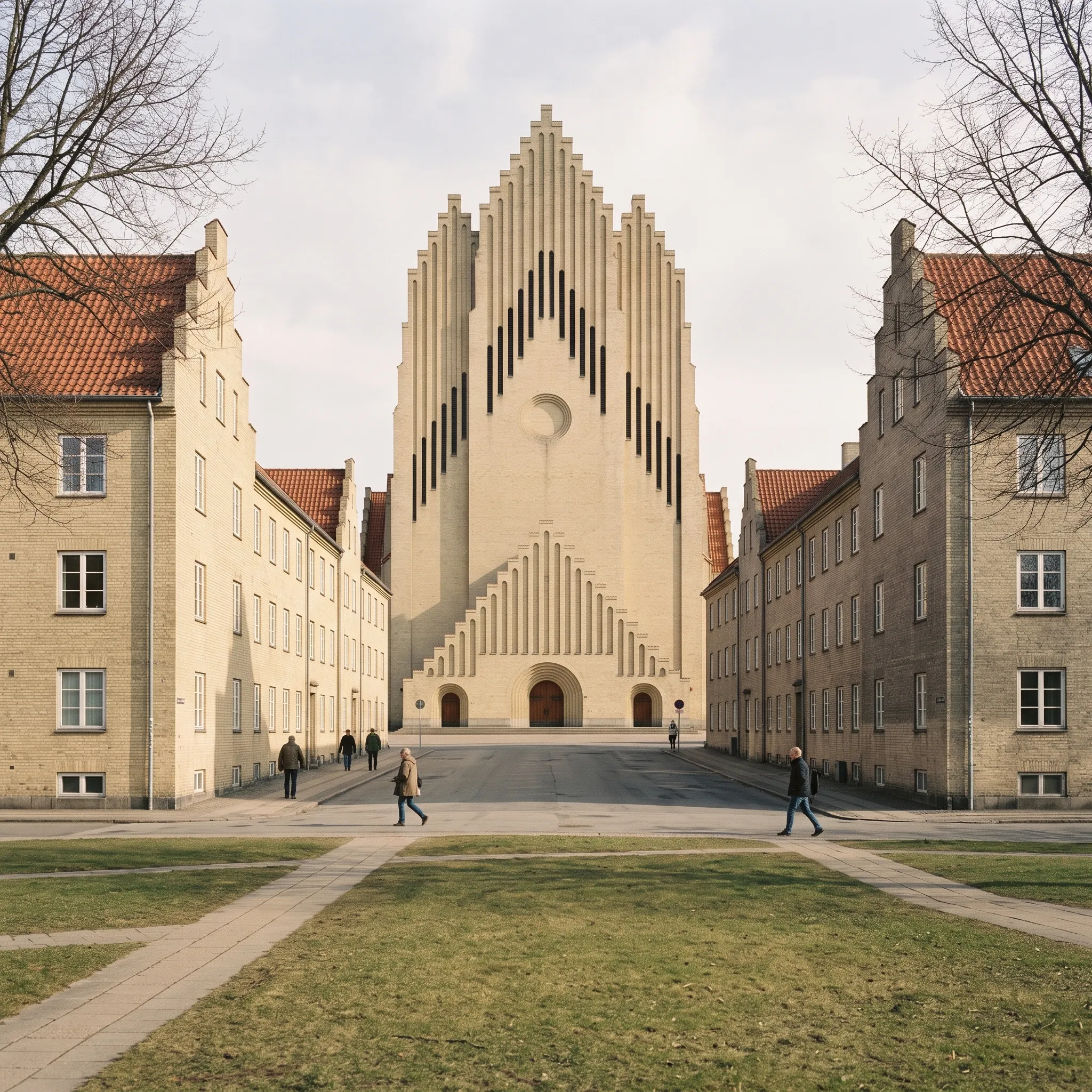
Grundtvig's Church, West Front
 AI-generated