Made with Archi Automate · AI render
Queen's House, South-East Oblique
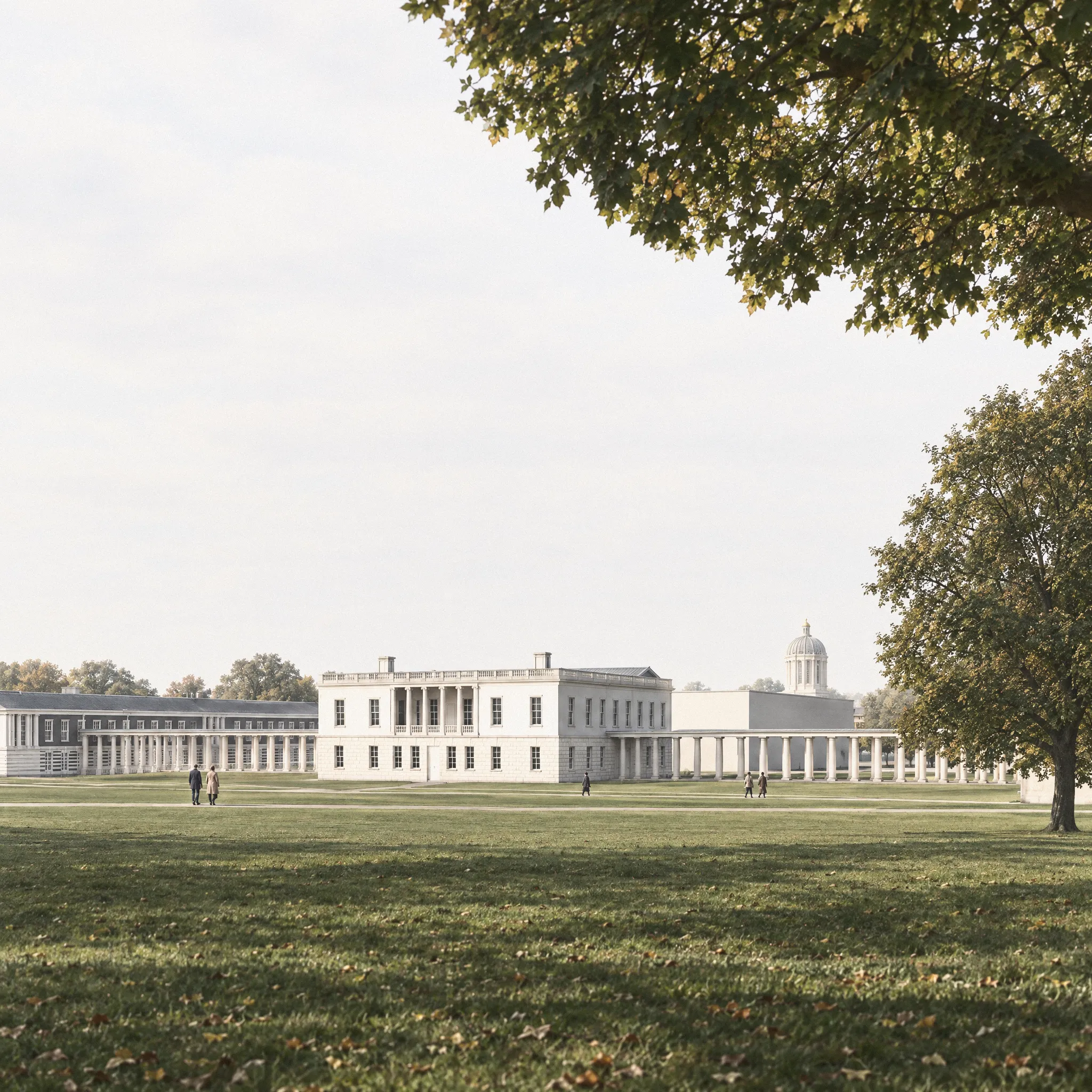
Inigo Jones's house seen from a grass bank under the park trees on an October morning, its lit south front against the shaded east side, rendered from the Revit model by GPT Image 2.5 Sunburst.
Archi did not design this building. We modelled it from published plates and public records to show what the software does.
2048 × 2048 px. Open it full size to see it at 100%.
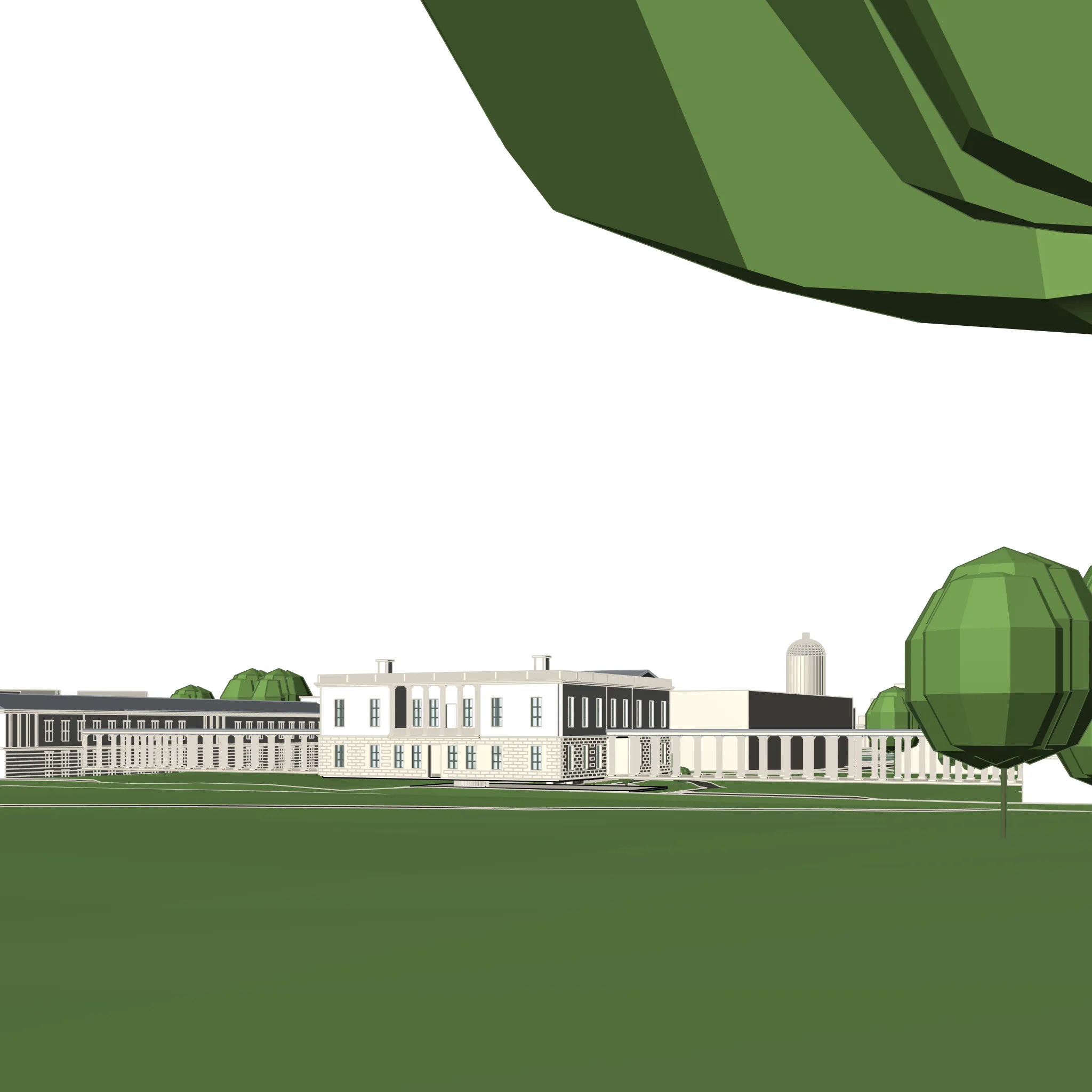
Not geometry-locked: compare with the model view. AI-generated imagery can change dimensions, openings and materials. Use the comparison below.
Compare with the model view
Tool chain
- Revit
- render_view
MCP calls, in order
- render_view
Provenance
| model | OpenAI GPT Image 2.5 Sunburst (openai/gpt-image-2.5-sunburst), reference lane |
|---|---|
| cost | $0.13 (metered estimate) |
| time | 48 s |
| date | 2026-11-08 |
The prompt
Using the Archi Automate MCP, take the Revit view [QH LD - 03 SE oblique bank trees late morning] as the reference image and render it with render_view on [GPT Image 2.5 Sunburst], with this image prompt: Architectural visualisation in calm, matte late-morning daylight. A pale, hazy mid-October sky in soft warm white-grey with gentle, barely visible cloud mottling; no blue sky and no sun disc in the sky. A hazy sun gives soft, clear, low-contrast light with soft shadows; the shaded sides stay luminous and readable, never black. A muted, neutral palette with low saturation, not golden; highlights creamy, never clipped. Light aerial haze softens the distance. Surfaces read matte and quiet with a fine, even grain; vegetation is soft and slightly impressionistic. A few small people in everyday clothes (three to six) walk on the lawn and the paths in the middle distance near the house, none closer than about 30 m to the camera, none looking at the camera. Calm, legible and hand-finished, like a quiet image printed on matte paper. Building: the Queen's House in Greenwich, London, by Inigo Jones (1616-35), seen from a slightly raised grass bank under park trees, in a two-point oblique view from the south-east; the house stands left of centre. In view: the south front of the house, a low, wide two-storey block: a rusticated Portland-stone ground storey with sash windows; a smooth white-rendered upper storey with sash windows and, at its centre, a first-floor loggia of Ionic columns with a stone balustrade between them; a stone cornice and a stone balustrade along the roof edge, two chimney stacks above the low lead roof. The east side of the house turns away to the right, with its own sash windows. From the house a long single-storey colonnade of Tuscan columns runs away to the right to the east museum wing, a pale two-storey block behind it. At the left, the west colonnade and the long west museum wing with its grey slate roof, and a few small tree crowns behind it. Right of the house, above the east wing, the upper part of one pale stone drum and dome of the Old Royal Naval College in the distance. In front, the wide park lawn across the lower third, with faint path lines. Close to the camera: the broad canopy of a park tree enters the top-right corner, and a mature tree with its trunk stands at the right edge, right of the end of the east colonnade. Light, follow it strictly: [15 October, 11:45]. The sun is behind the camera on the left, out of frame, about 29 degrees high. The south front of the house (the long face toward the camera) is fully lit. The east side of the house (the narrow face turning away on the right) is in soft, luminous shade, clearly darker than the south front: this lit and shaded pair of faces is the point of the image. The loggia recess is in shadow behind its lit columns. Tree shadows on the lawn run away from the camera and a little to the right. The near canopy is seen from below against the sky and reads dark and soft underneath, with a few lit leaf edges; the right-hand tree is dark too. Materials: The ground storey is pale, honed Portland stone, a soft warm grey-white, matte, with crisp channelled joints, not polished, not marble. The upper storey is smooth white lime render, matte, slightly warm, not brilliant white. The columns, capitals, balustrades, cornice and window surrounds are pale Portland stone. The sash windows are white-painted timber with fine glazing bars and softly dark glass; keep the number of panes as in the input. The low roof is grey lead. The museum wings are pale, with grey slate roofs; the colonnade columns are pale stone. The very dark grey faces in the input (the east side of the house and the museum wing fronts) are only the viewer's flat shading, not dark material: they are the same white render and pale stone in soft shade. The lawn is mown park grass in a muted autumn green. The input is a simplified model. The thin dark line along the base of the house is a gap in the model: render a solid rusticated Portland-stone plinth that meets the lawn along both faces, with no gap and no dark slot. The faceted green shapes are placeholder trees: the large faceted mass at the top right is the underside of a near tree canopy, and the round faceted crown at the right edge is a single tree on a proper trunk. Replace them with real mature sweet chestnut, plane and lime trees in mid-October leaf, still mostly green with the first yellow tints, at the same positions and sizes, with natural, irregular, open crowns; do not keep their faceted or round outlines. The near canopy and the right-hand tree may be slightly soft; the house is sharp. Calm and restrained: no added effects, no leaves in the air, no birds; only a light, natural scatter of fallen leaves on the grass. Corrections, follow them strictly: on the south front the ground storey has eight sash windows and one central door, exactly where the input shows them; keep the door. The upper-storey windows have plain, flat stone surrounds, with no cornices, hoods or pediments over them. All window glass is dark neutral grey, never green or teal. On the east side the upper storey has eight tall, narrow sash windows, as in the input. The east side receives no direct sun: it is one even, soft shade, clearly darker than the lit south front, on both storeys. No downpipes, poles, lamp posts or signs in front of the facades. The near canopy keeps the outline of the faceted mass in the input and does not hang lower than it. Treat the input image as the exact geometry and camera. Keep every building element exactly where it is: outline, proportions, the number, spacing and thickness of columns, mullions and frames, floor and roof edges, openings, stairs and terraces. Keep the camera position, lens, horizon height and frame exactly as in the input. Do not add, remove, move, bend or resize any part of the building. Change only how materials, light, sky, vegetation, people and atmosphere look. Avoid: saturated blue sky, sunset or golden-hour colour, dramatic clouds, lens flare, HDR look, glossy CGI reflections, deep black shadows, vignetting, tilted or converging verticals, visible brush strokes, oil-paint or canvas-weave texture, people posing or looking at the camera, people close to the camera, cars in the foreground, text, logos or watermarks, sun disc or sun in the sky, falling leaves or leaves in the air, birds, mist effects, faceted or perfectly spherical tree crowns, a gap or dark slot under the house, a lit east side of the house, branches or trunks crossing the house, a grand external stair on the south front.
Method notes
AI-generated visualisation. Not a photograph. GPT Image 2.5 Sunburst (OpenAI) rendered this image through Archi Automate’s render_view from a Revit 3D view of a model built in Revit through the Archi Automate MCP, mostly by GPT-6.1-sol (OpenAI) running in Codex. The model was built from Colen Campbell’s Vitruvius Britannicus (1715) plates and the Historic England list entries, with the park and its trees from open LiDAR and map data. The prompt is the second one for this view: the first, plus a paragraph of corrections written after checking its result. It was chosen from four renders of this view (two prompts, two models).
Done outside Archi Automate. The image above is not the raw output. A small script applied the Linen Daylight tone step, our own style: a gentle tone curve, a little less saturation and a fine grain. The untouched render is linked below.
Added by the render, not in the model view: a few small people walking on the lawn, which the prompt asked for (they are generated by the model and are not real people); real chestnut, plane and lime trees in place of the model’s faceted placeholder trees; the dome in the distance drawn in detail; fallen leaves. The museum wings are plain masses in the model, and the render keeps them plain. It is a restyled view, composition guided by the model view, not a record of the model.
What it gets wrong. The tree at the right edge has a larger crown than in the model and hides a little more of the end of the colonnade.
The image above is re-encoded for the web and does not carry Content Credentials. The original PNG (6.1 MB) is the render as returned, before the tone step, and keeps OpenAI’s C2PA Content Credentials. The render record lists the model, prompt, input and cost.
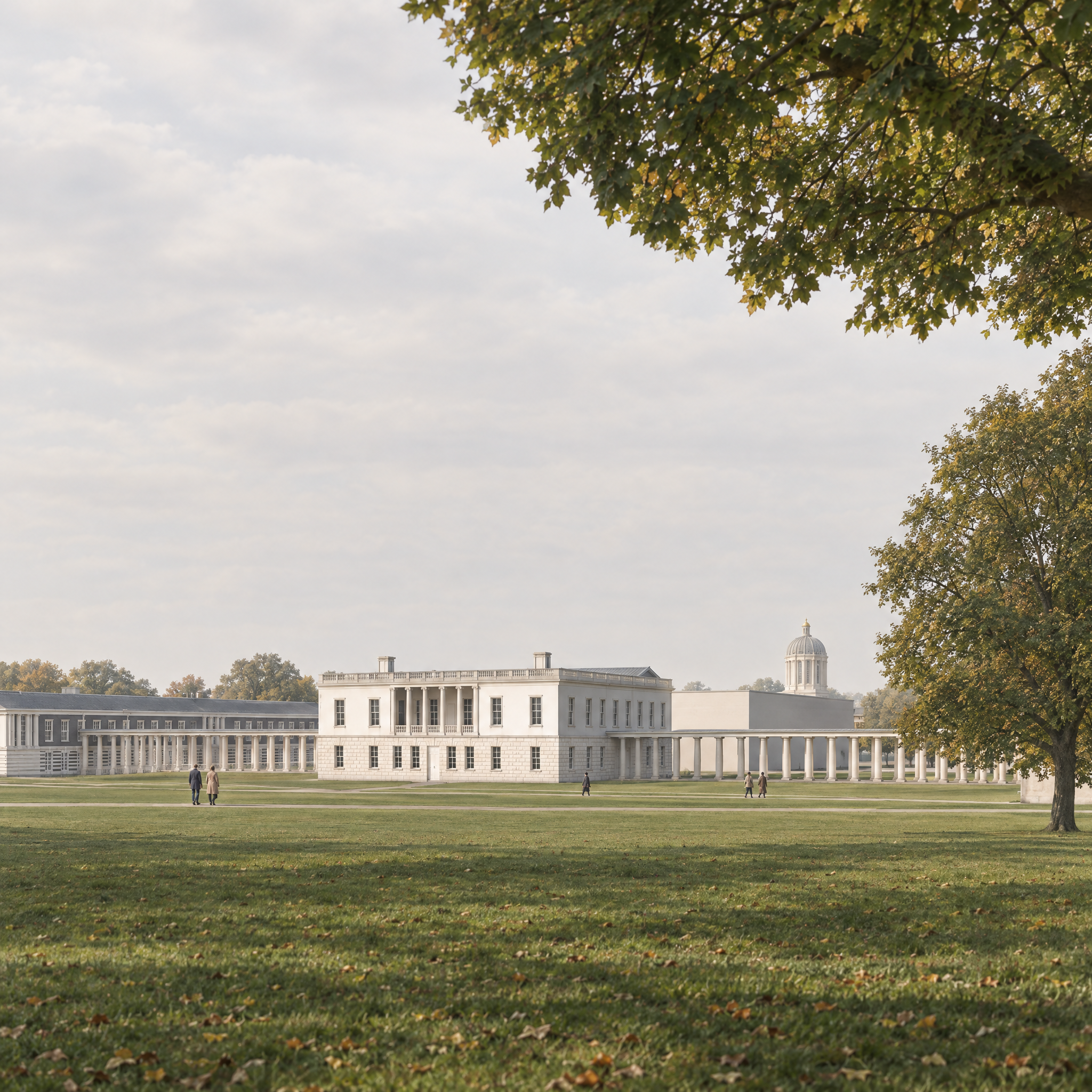
The Queen’s House in Greenwich was designed by Inigo Jones (1616-35). It is a Grade I listed building, owned and run by Royal Museums Greenwich. This image is a render of our own model, not a photograph taken on the estate, and it is not endorsed by Royal Museums Greenwich. Site data: contains Ordnance Survey data © Crown copyright and database right 2026; © Environment Agency copyright and/or database right 2020 and 2022; Historic England list entries; all under the Open Government Licence. © OpenStreetMap contributors (ODbL).
Windows · 14-day free trial · no credit card. Install, connect your assistant, paste the prompt. Replace bracketed values with your own.
More in AI renders
View category ↗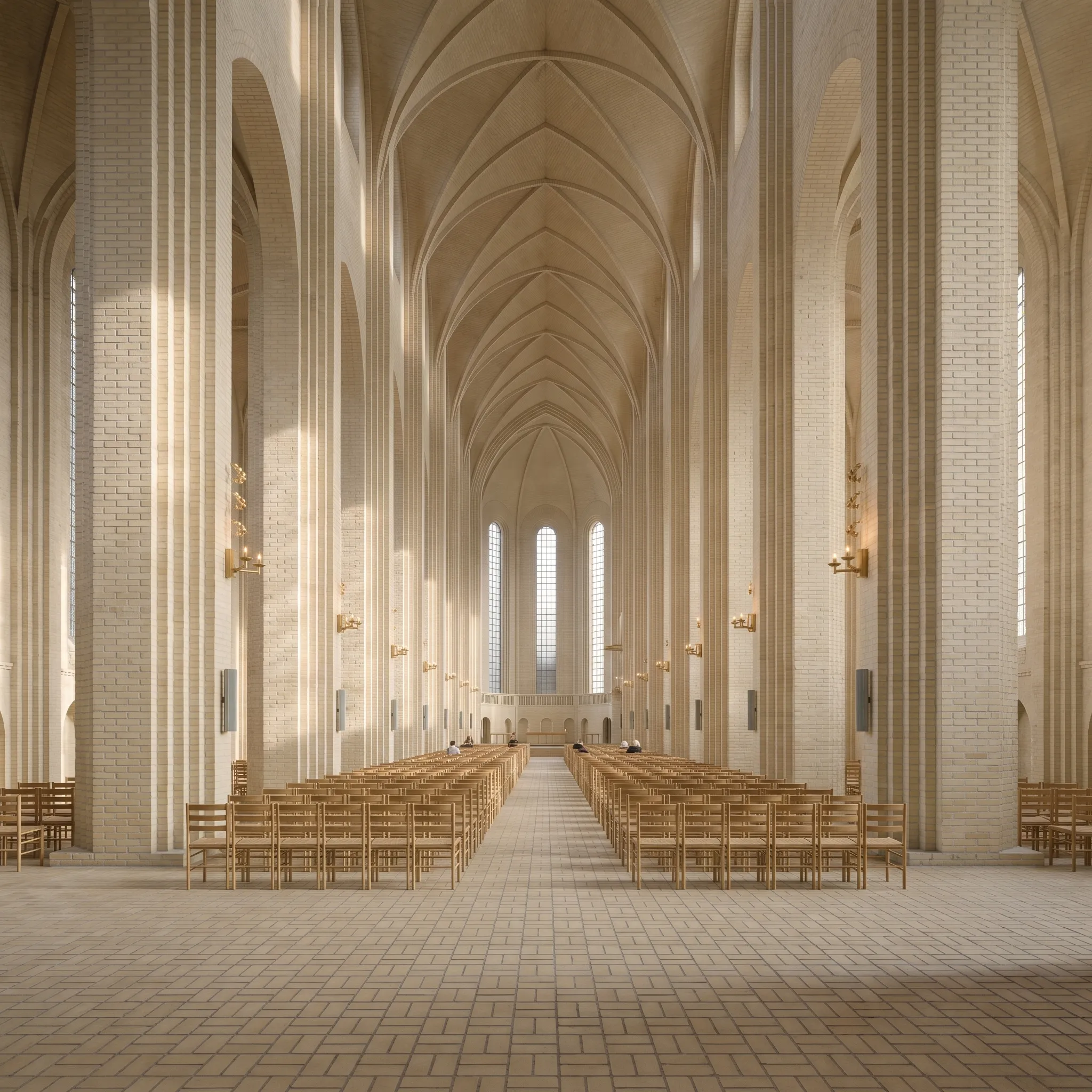 AI-generated
Grundtvig's Church, Nave
 AI-generated
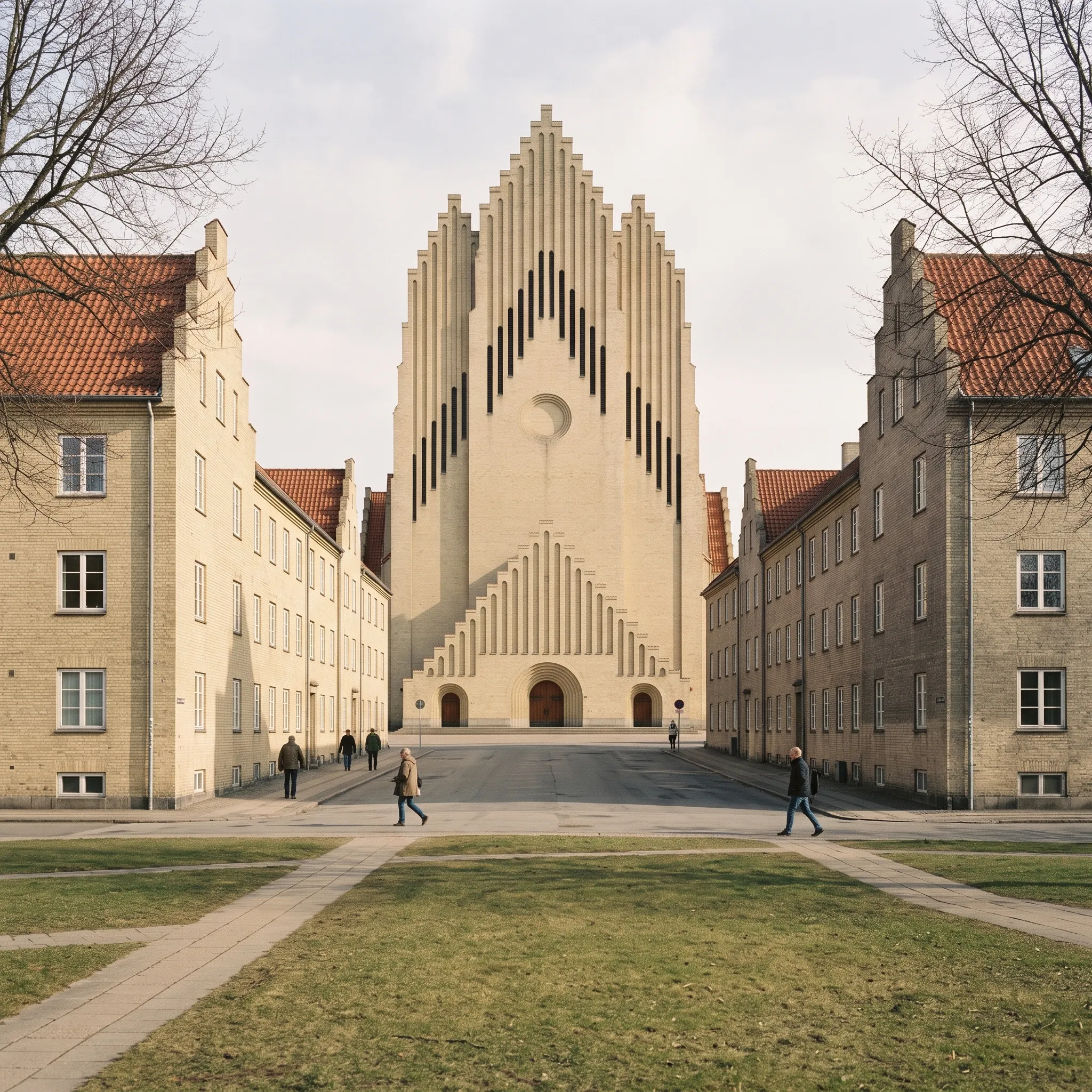
Grundtvig's Church, West Front
 AI-generated